The best dual monitor arms depend on your monitors’ weight and VESA pattern, your desk’s mounting options, and how you arrange your screens. These four HUANUO models cover side-by-side and stacked setups, with different height ranges, screen limits and desk features to weigh before buying.
Quick Top Products
HUANUO FlowLift Dual Monitor Stand
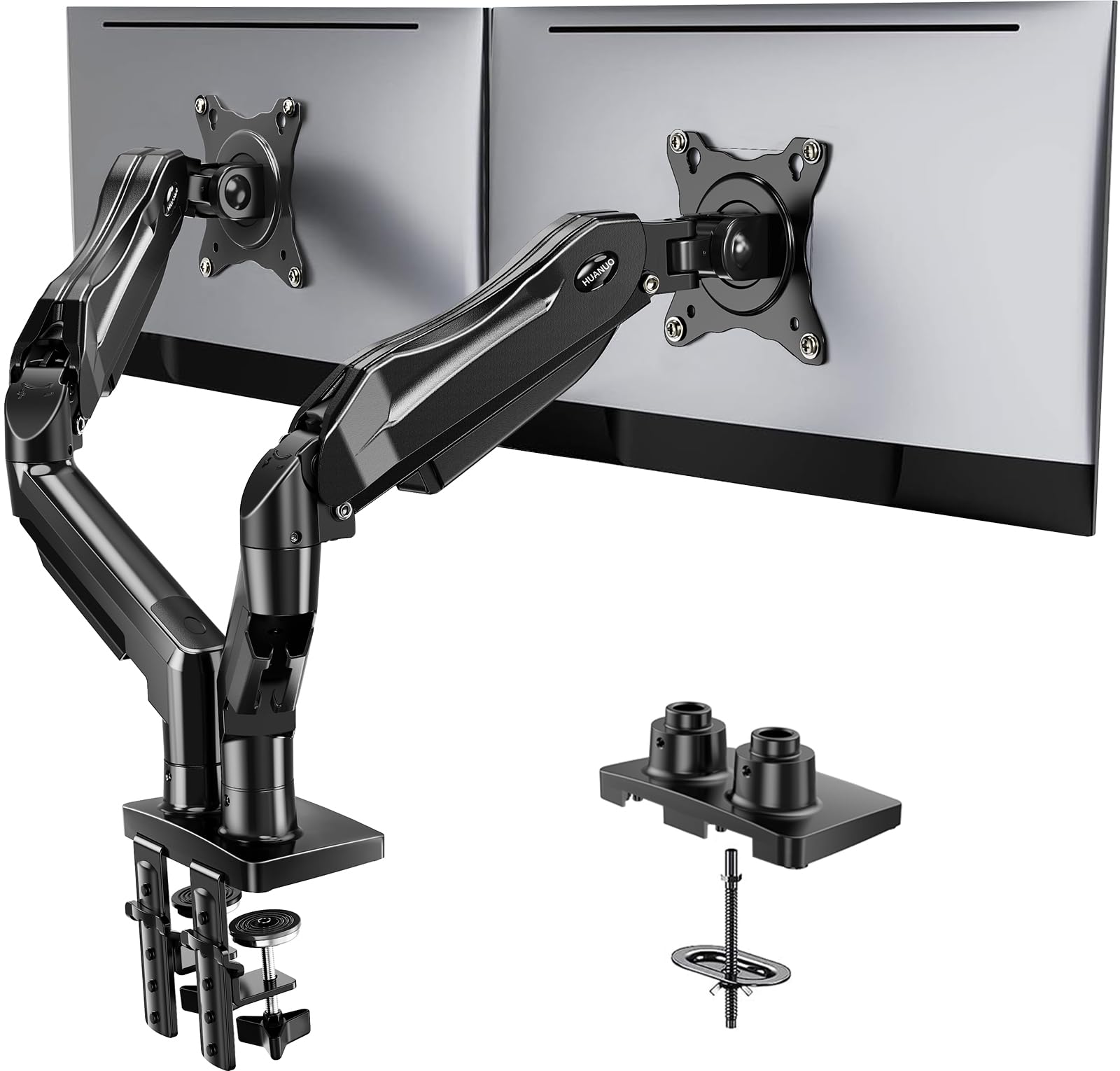
- Fits 13–32-inch screens weighing 4.4–19.8 lb per arm.
- Offers tilt, swivel and 360-degree rotation.
- Supports C-clamp or grommet mounting and includes cable management.
Best For: A two-screen desk setup where flexible positioning and cable routing matter.

HUANUO Vertical Dual Monitor Stand
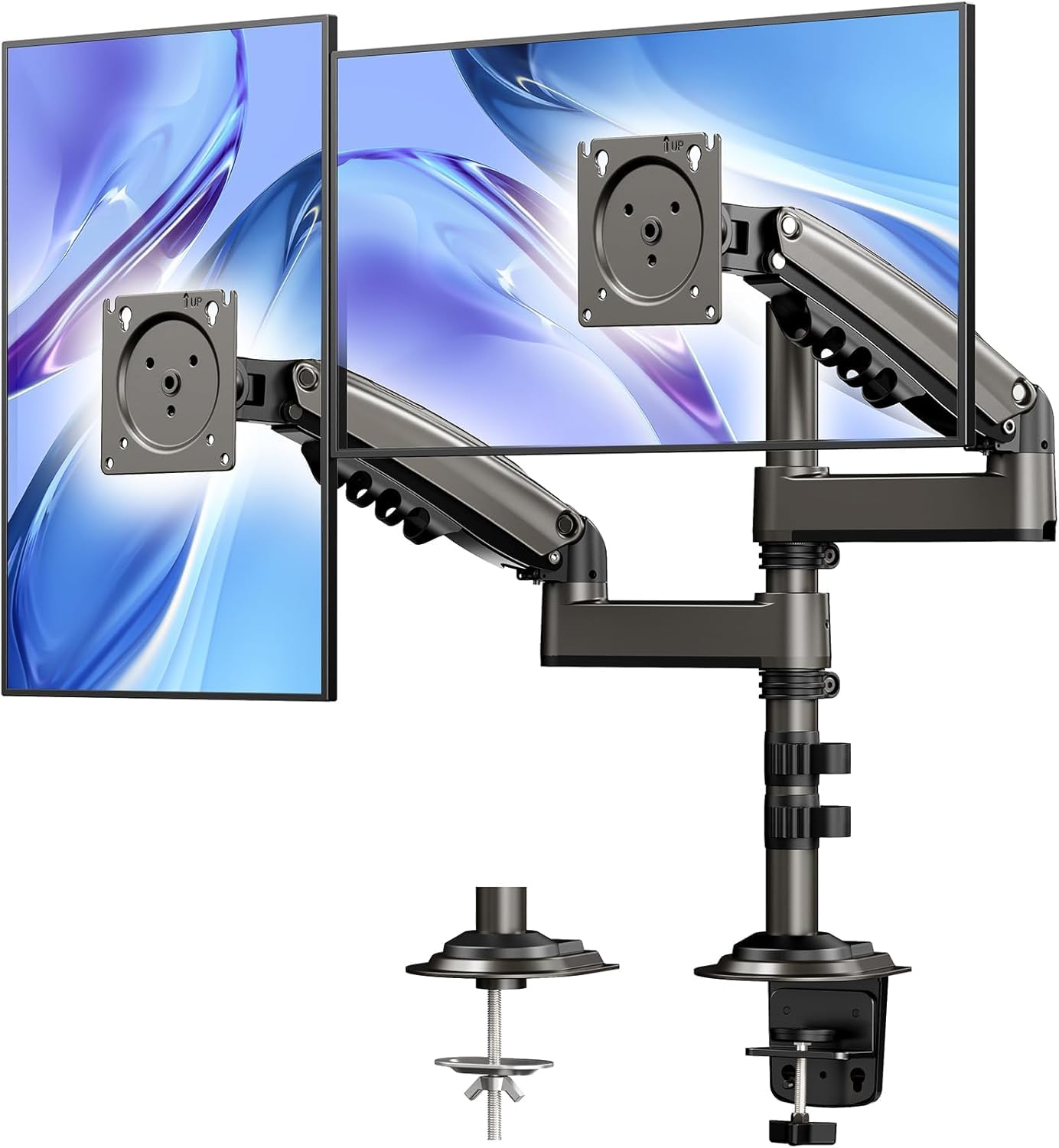
- Uses a stacked layout for two monitors up to 32 inches each.
- An extension raises the screens up to 25.19 inches.
- Offers C-clamp or grommet desk mounting.
Best For: People who want two compatible monitors arranged vertically with extra height adjustment.
HUANUO HNDS7 Dual Monitor Stand
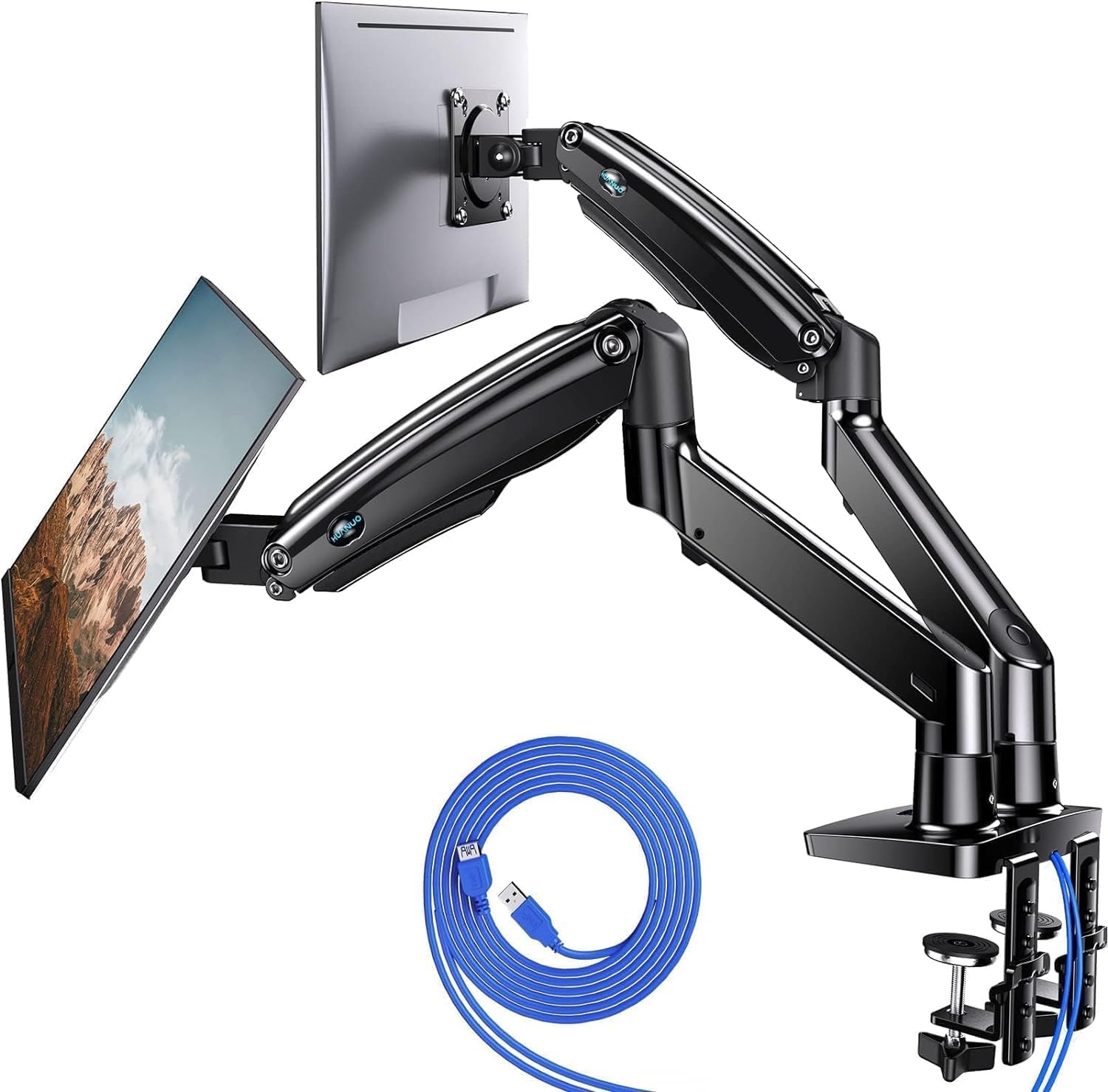
- Supports two 13–40-inch monitors weighing up to 26.4 lb per arm.
- Arms raise up to 21.1 inches and extend up to 25.59 inches.
- Includes two USB ports and a 5.25-foot USB cable.
Best For: A dual-screen setup with larger or heavier monitors and a need for built-in USB ports.
HUANUO FlowLift Pro Dual Monitor Mount
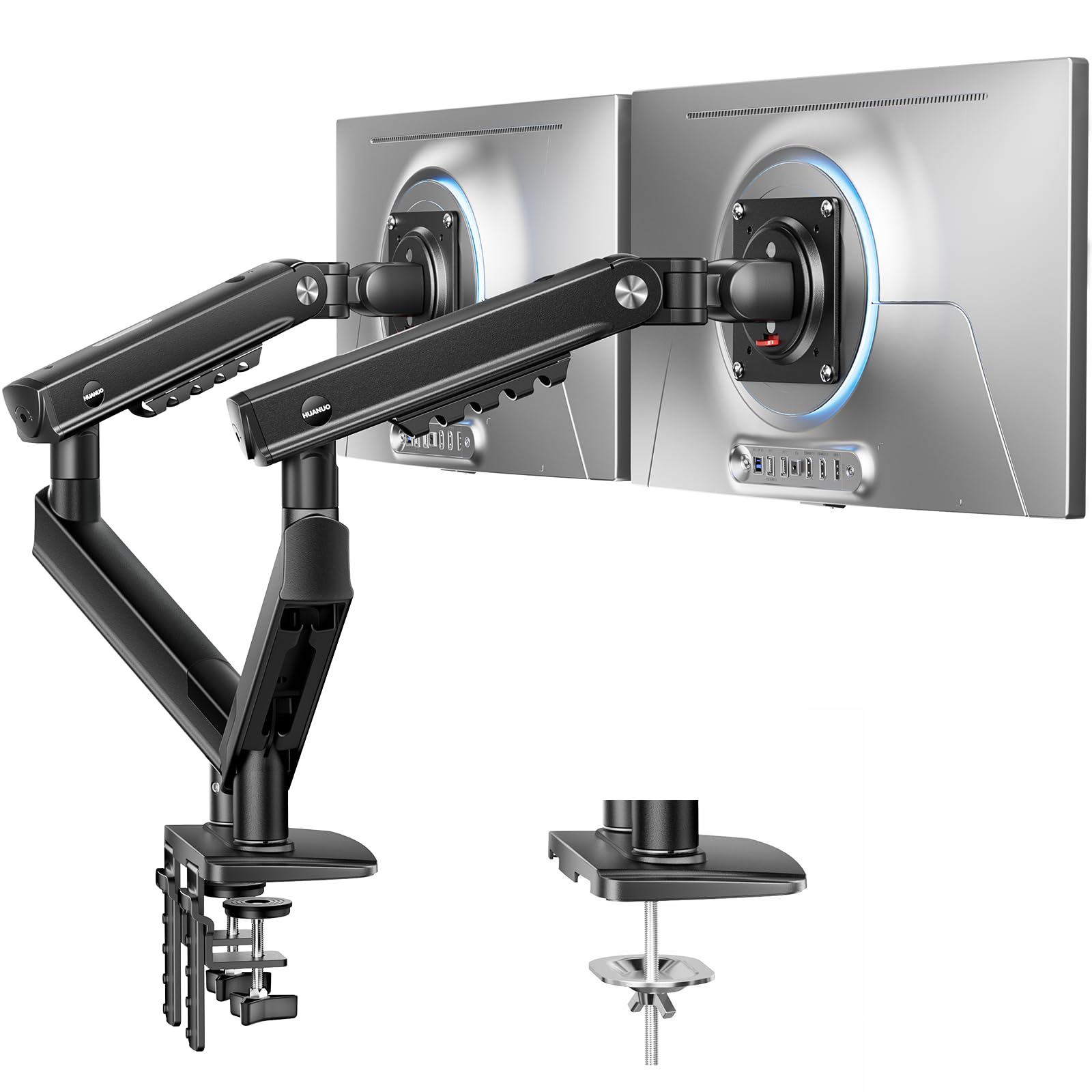
- Fits screens from 13 to 27 inches, with each monitor weighing 4.4 to 15.4 lb.
- The InstaMount VESA plate attaches or detaches without tools.
- A PrecisionView window provides a visual tension indicator.
Best For: A compatible pair of lighter monitors for users who want a snap-on VESA plate and visible tension adjustment.
Flexible Side-by-Side Positioning
HUANUO FlowLift™ Dual Monitor Stand, Fully Adjustable Gaming Monitor Desk Mount for 13–32″ Computer Screens, Full Motion VESA 75x75/100x100 with C-Clamp & Grommet Base, Each Arm Holds 4.4 to 19.8 lbs
The HUANUO FlowLift supports two 13–32-inch monitors, with each arm rated for 4.4–19.8 lb and VESA 75x75 or 100x100 mounting. Its arms tilt, swivel and rotate, and can raise screens up to 15.75 inches.
A C-clamp or grommet base gives two mounting options, while built-in cable management keeps wires along the arms. Check your desk carefully: the instructions recommend wooden desks between 0.59 and 3.54 inches thick, with no cross beams or panels underneath the mounting area.
Plastic and glass desks are not recommended. The per-arm weight range also rules out displays that are too light or too heavy.
Best For: A two-screen desk setup where flexible positioning and cable routing matter.
| Pros | Cons |
|---|---|
|
|
Choose this model if both monitors fit its per-arm weight and size limits and you want broad positioning options for a side-by-side workspace. Its C-clamp and grommet choices are useful, but the desk material and underside clearance are important constraints.
Before buying, confirm the VESA pattern on both screens, their individual weights, and whether the mount can fit your desk edge without hitting a cross beam. Its maximum height is lower than the tall stacked option in this roundup.
Tall Stacked-Screen Arrangement
HUANUO 17-32 Inch Dual Monitor Stand, Vertical Dual Monitor Mount, Monitor Stand 2 Monitors, Ergonomic Adjustable Tilt/Swivel/Rotate, Weight Max 19.8 lbs, VESA 75/100mm
This HUANUO stand is designed for two monitors stacked vertically, with an extension that raises them up to 25.19 inches. Each screen must be no larger than 32 inches, weigh between 4.4 and 19.8 lb, and have 75x75 or 100x100 VESA holes.
The mount offers 90-degree tilt, 180-degree swivel and 360-degree rotation, plus integrated cable management. It attaches by C-clamp or grommet to desk surfaces 0.39–3.54 inches thick.
Solid wood or metal desks are supported; glass desks are not. The vertical layout can suit a narrow desk, but check that the stacked screens and their combined height fit your viewing space.
Best For: People who want two compatible monitors arranged vertically with extra height adjustment.
| Pros | Cons |
|---|---|
|
|
Consider this model if vertical stacking fits your work and you need more height range than a conventional side-by-side arrangement offers. Its screen limits and VESA requirements should be checked for each display, and its clamp or grommet needs a compatible desk edge or hole.
Before choosing it, make sure the upper monitor will sit comfortably within your viewing area and that desk material is wood or metal. The stacked design is the key tradeoff: it saves lateral spread, while placing one screen above the other.
Support for Larger, Heavier Displays
HUANUO Dual Monitor Stand for 13″–40″, Premium Dual Monitor Mount with USB, Height Adjustable Monitor Stand for 2 Monitors, VESA Mount with Clamp/Grommet Base, Holds 26.4lbs per Arm, HNDS7
The HUANUO HNDS7 is the broadest-fit option here for screen size and per-arm load: it supports two 13–40-inch displays weighing up to 26.4 lb each, with VESA 75x75 or 100x100 patterns. Its arms raise up to 21.1 inches and extend up to 25.59 inches, while tilt, swivel and rotation help adjust viewing angles.
For mounting, choose a clamp or bolt-through grommet; the grommet hole must measure 0.39–1.97 inches in diameter, and desk thickness can be up to 3.54 inches. Two built-in USB ports and a 5.25-foot cable add convenient device charging.
Confirm the grommet dimensions or clamp fit before purchase.
Best For: A dual-screen setup with larger or heavier monitors and a need for built-in USB ports.
| Pros | Cons |
|---|---|
|
|
Choose the HNDS7 if your screens are larger or heavier than the limits on the other arms here, or if USB ports at the mount would simplify your desk. Its extra reach and height may also help with a deeper desk.
Check each monitor’s VESA pattern and weight, then verify whether your desk can take the clamp or has a correctly sized grommet hole. The facts give a maximum load but no minimum, so confirm suitability if your displays are unusually light.
Tool-Free VESA Attachment
HUANUO FlowLift Pro Dual Monitor Mount for 13–27" Screens, MechaSpring Monitor Stand, Adjustable Monitor Arms for 2 Monitors with Tilt/Swivel/Rotation, Tool-Free VESA Mount, Max Load 15.4 lbs
The FlowLift Pro is built for two 13–27-inch screens, each weighing 4.4–15.4 lb and using a 75x75 or 100x100 VESA pattern. Its tool-free InstaMount plate lets you attach or detach monitors with a snap, while a PrecisionView window shows tension adjustment through an indicator.
The LockSteady system is intended to resist sagging and allow smooth repositioning. The mount is recommended for wooden desks 0.59–3.54 inches thick, and irregular desk edges need extra care.
Its narrower screen and weight limits make it a less suitable match for large or heavy displays. Confirm the desk edge and each monitor’s weight before ordering.
Best For: A compatible pair of lighter monitors for users who want a snap-on VESA plate and visible tension adjustment.
| Pros | Cons |
|---|---|
|
|
This arm is a fit for lighter, smaller displays when quick VESA attachment and a visual tension reference appeal to you. Its supported screen range tops out at 27 inches and 15.4 lb per monitor, so check both displays individually before purchase.
The wooden-desk recommendation also makes desk material and edge shape part of the decision. Compared with the larger dual monitor stand option, it trades support for larger displays and USB charging for the tool-free mounting plate and visible tension adjustment.
How to Choose Dual Monitor Arms
How We Picked Dual Monitor Arms
The selection covers four distinct ways to support two screens: flexible positioning across a desk, a vertically stacked layout, support for larger displays, and a tool-free VESA attachment. We compared each model’s stated screen-size and weight limits, VESA requirements, movement options and desk-mount details.
These factors determine whether an arm can fit a particular pair of monitors and work surface.
Start by checking both monitors separately. A shared VESA pattern does not guarantee a fit if one screen exceeds the arm’s size or weight range.
The FlowLift Pro has a narrower screen and load range, while the HNDS7 accommodates larger displays and gives a higher stated maximum load. The other two options cover up to 32-inch screens but differ in layout and height.
Comparing Dual Monitor Arms for Desk Fit
Desk compatibility varies as much as monitor support. The first FlowLift and FlowLift Pro recommend wooden desks and give a 0.59–3.54-inch thickness range; the FlowLift also calls for clear space under the mounting point.
The vertical HUANUO model supports wood or metal desks, excludes glass, and accepts desks 0.39–3.54 inches thick. HNDS7 offers clamp or bolt-through grommet mounting, with a specified grommet-hole diameter.
Match those details to the exact desk edge or opening you plan to use.
The mounting method affects installation choices. A clamp avoids needing a grommet hole, while bolt-through or grommet mounting depends on the desk opening and its dimensions.
Check underside clearance for clamps and make sure the desk material is suitable. For the HNDS7, confirm that a grommet hole falls within its stated diameter range; the two clamp-based models with stated wood recommendations call for additional caution with irregular edges.
| Product | Standout features | Best for |
|---|---|---|
| HUANUO FlowLift Dual Monitor StandCheck Price |
| A two-screen desk setup where flexible positioning and cable routing matter. |
| HUANUO Vertical Dual Monitor StandCheck Price |
| People who want two compatible monitors arranged vertically with extra height adjustment. |
| HUANUO HNDS7 Dual Monitor StandCheck Price |
| A dual-screen setup with larger or heavier monitors and a need for built-in USB ports. |
| HUANUO FlowLift Pro Dual Monitor MountCheck Price |
| A compatible pair of lighter monitors for users who want a snap-on VESA plate and visible tension adjustment. |
Choosing Monitor Arm Layout and Reach
Side-by-side arms let you move screens independently across the desk, while the vertical model places one above the other and can reduce the width needed for two displays. Its extension raises screens up to 25.19 inches.
The HNDS7 offers arms that raise up to 21.1 inches and extend up to 25.59 inches, while the first FlowLift raises monitors up to 15.75 inches. These figures describe different aspects of reach, so consider your desk depth and intended screen positions rather than comparing them as a single measure.
Movement ranges can also matter if you rotate a display for portrait reading or frequently adjust a shared workstation. The first FlowLift and vertical model specify full rotation, with different tilt and swivel ranges.
FlowLift Pro emphasizes its tool-free VESA plate and visual tension indicator; the HNDS7 adds USB ports. Check which adjustment or desk feature will matter in your routine, since a taller mount does not automatically suit every chair or screen position.
Who Should Buy Which Dual Monitor Arm
Choose the vertical HUANUO stand when saving desk width through a stacked arrangement is the priority and the desk can support its clamp or grommet. Pick the first FlowLift for a more conventional two-screen arrangement with broad motion and cable routing, provided the wooden desk fits its mounting requirements.
The HNDS7 is the choice to examine for larger or heavier monitors, extra reach, or built-in USB charging. FlowLift Pro suits a lighter, smaller pair when quick VESA attachment and visible tension adjustment are useful.
In every case, verify each screen’s weight and VESA pattern and check desk thickness, material, edge shape and underside clearance before settling on a mount.