This tp link tl sg105 switch review looks at a compact, unmanaged option for adding wired connections where a router or existing switch needs more ports.
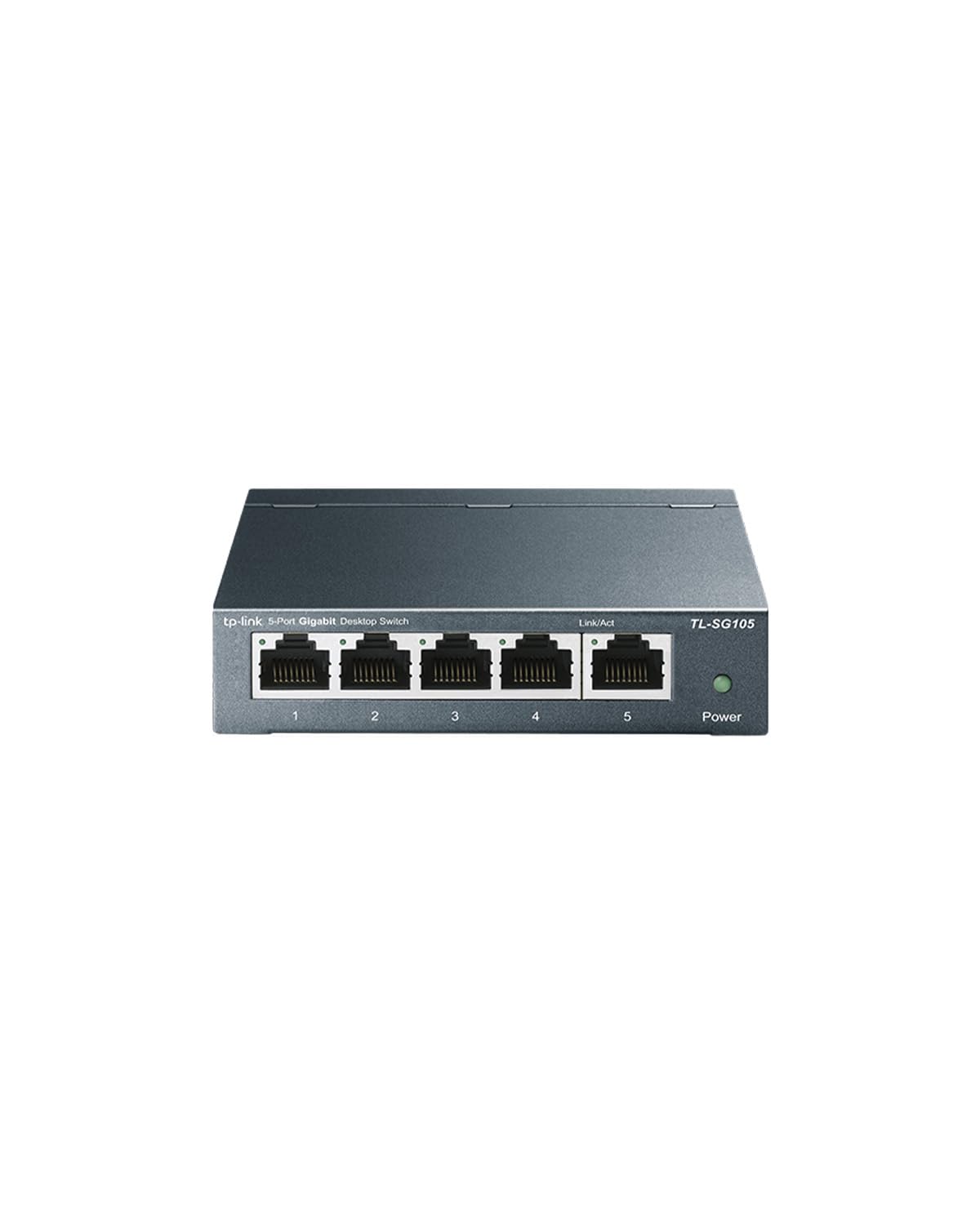
Its five Gigabit Ethernet ports, fanless metal case, and plug-and-play setup make it appealing for simple desktop or wall-mounted installations.
TP-Link TL-SG105 Review Summary
The quick verdict
130,000+ ratings
Read Amazon ReviewsTP-Link TL-SG105
A practical choice for adding wired Gigabit connections to a home or small office network, with quiet operation and straightforward setup.
- Five RJ45 Ethernet ports supporting 10/100/1000 Mbps.
- Auto-negotiation and Auto MDI/MDIX support for connected devices.
- Plug-and-play operation with no software installation or configuration needed for setup.
- Port-based 802.1p/DSCP QoS and IGMP Snooping for traffic handling.

Pros
- Five Gigabit Ethernet ports provide a straightforward way to add wired connections.
- Fanless operation is suited to locations where switch noise would be distracting.
Consider before buying
- Five ports can fill quickly once one is used to connect the switch to the router or upstream network.
- The unmanaged design is aimed at simple expansion rather than hands-on network configuration.
Read the full review summary
The TL-SG105 is designed to expand a wired network with five 10/100/1000 Mbps RJ45 ports. Auto-negotiation and Auto MDI/MDIX simplify connections with compatible Ethernet devices, while the unmanaged, plug-and-play design avoids a software setup process.
A metal case and fanless construction suit spaces where a quiet, unobtrusive switch is useful.
Traffic features give it more flexibility than a basic port expander: port-based 802.1p/DSCP QoS can prioritize traffic, and IGMP Snooping is included.
These features may suit a small home or office network handling mixed voice, video, and general data traffic.
It remains a five-port switch, so buyers should count the uplink as one of those ports and consider whether five total connections will cover the planned layout.
The buying factors
TP-Link TL-SG105 Scorecard
Editorial scores reflect listed features and buyer fit; they are not laboratory measurements or customer ratings.
Port capacity
Five Gigabit ports add useful wired capacity for a small setup, but the uplink also occupies one port.
Gigabit connectivity
All five RJ45 ports support 10/100/1000 Mbps, with auto-negotiation and Auto MDI/MDIX.
Setup simplicity
The plug-and-play design requires no software installation or configuration for basic use.
Traffic controls
QoS and IGMP Snooping offer useful traffic-handling features for compatible network needs.
Placement flexibility
The metal case is designed for desktop or wall mounting, and fanless operation supports quiet placement.
Power efficiency
Energy-efficient technology is included, though no specific consumption figure is provided.
Key Features and Specifications of TP-Link TL-SG105
- Five RJ45 Ethernet ports supporting 10/100/1000 Mbps.
- Auto-negotiation and Auto MDI/MDIX support for connected devices.
- Plug-and-play operation with no software installation or configuration needed for setup.
- Port-based 802.1p/DSCP QoS and IGMP Snooping for traffic handling.
- IEEE 802.3X flow control is specified for data transfer.
- Fanless metal casing with desktop and wall-mounting design.
- The product information lists a three-year warranty and weekday technical support; check the warranty terms applicable to your purchase.
Pros and Cons of TP-Link TL-SG105
Pros
- Five Gigabit Ethernet ports provide a straightforward way to add wired connections.
- Fanless operation is suited to locations where switch noise would be distracting.
- Plug-and-play setup keeps basic installation simple.
- QoS and IGMP Snooping add traffic-handling options beyond basic switching.
- Desktop and wall-mounting design gives buyers placement flexibility.
Consider before buying
- Five ports can fill quickly once one is used to connect the switch to the router or upstream network.
- The unmanaged design is aimed at simple expansion rather than hands-on network configuration.
- The supplied specifications do not give a detailed power-consumption figure, so buyers focused on energy use should check current manufacturer documentation.
Who Should Buy TP-Link TL-SG105?
Good fit
Consider the TL-SG105 if you need a small wired expansion for a home office, media area, or compact work setup.
Its five Gigabit ports can connect compatible wired devices, while auto-negotiation and Auto MDI/MDIX help simplify ordinary Ethernet connections. The unmanaged design is a good fit when you want to connect devices without managing a switch interface.
The fanless metal housing is useful when the switch will sit near a desk or other quiet space. Desktop or wall mounting can also help adapt it to the available placement.
Before buying, map the connections: allow one port for the upstream link and count the remaining ports against the devices you want to wire.
Its QoS and IGMP Snooping features may be relevant when a network carries different kinds of traffic, including voice or video.
Treat these as traffic-management tools, not a guarantee of improved service; their usefulness depends on the rest of the network and how devices use it.
Who should skip it
Choose a different capacity if your current and planned wired devices would exceed four downstream connections after reserving a port for the upstream link.
This is not the right fit if you need a managed switch with configuration controls. Confirm the feature set against your network requirements before choosing an unmanaged model.
What the TP-Link TL-SG105 Means for a Small Wired Network
Count usable connections before choosing
The five-port total includes the connection back to the router or upstream switch, leaving up to four other ports for local devices in a typical layout.
Counting the uplink first helps avoid buying a switch that is already too small for the intended setup.
Gigabit ports support mixed wired devices
Each RJ45 port supports 10/100/1000 Mbps and includes auto-negotiation. The switch can therefore connect compatible Ethernet devices with different link rates; actual network performance also depends on the devices, cabling, and upstream connection.
Quiet placement and mounting options
Fanless construction avoids a moving fan, while the metal case and desktop or wall-mounting design allow more than one placement approach.
For a wall installation, check that the location leaves access to power and Ethernet cables and suits the intended cable routing.
Traffic features are part of the appeal
Port-based 802.1p/DSCP QoS and IGMP Snooping give the TL-SG105 traffic-handling features that can matter in networks carrying voice or video alongside other data.
Buyers should confirm that these functions align with their equipment and use case; simply having them does not ensure a particular application will run better.
Alternatives to TP-Link TL-SG105
No alternative model is recommended here. Compare the design and features that matter to your routine before choosing another option.
Is TP-Link TL-SG105 Worth It?
The TP-Link TL-SG105 is worth considering when you need a compact, quiet way to add a few wired Gigabit connections and prefer a simple, unmanaged setup.
Its five ports, mounting flexibility, QoS, and IGMP Snooping make a useful feature set for a modest network expansion.
The key buying check is capacity: reserve one port for the upstream connection and confirm the remaining four are enough. If you need more connections or managed configuration, choose a switch designed for those requirements.
Your review at a glance
130,000+ ratings
Read Amazon ReviewsTP-Link TL-SG105
A practical choice for adding wired Gigabit connections to a home or small office network, with quiet operation and straightforward setup.
- Five RJ45 Ethernet ports supporting 10/100/1000 Mbps.
- Auto-negotiation and Auto MDI/MDIX support for connected devices.
- Plug-and-play operation with no software installation or configuration needed for setup.
- Port-based 802.1p/DSCP QoS and IGMP Snooping for traffic handling.